
The Problem With Loop Detectors and What Camera-Based Timing Solves
By JD Medford • June 26, 2026 • 5 minute read
When a guest gives up and leaves before ordering, a loop detector records nothing. No wait time, no drive-off, no sign they were ever there. Here's what loops can't see, what those blind spots cost, and how adding cameras closes the gap without starting over.
Share
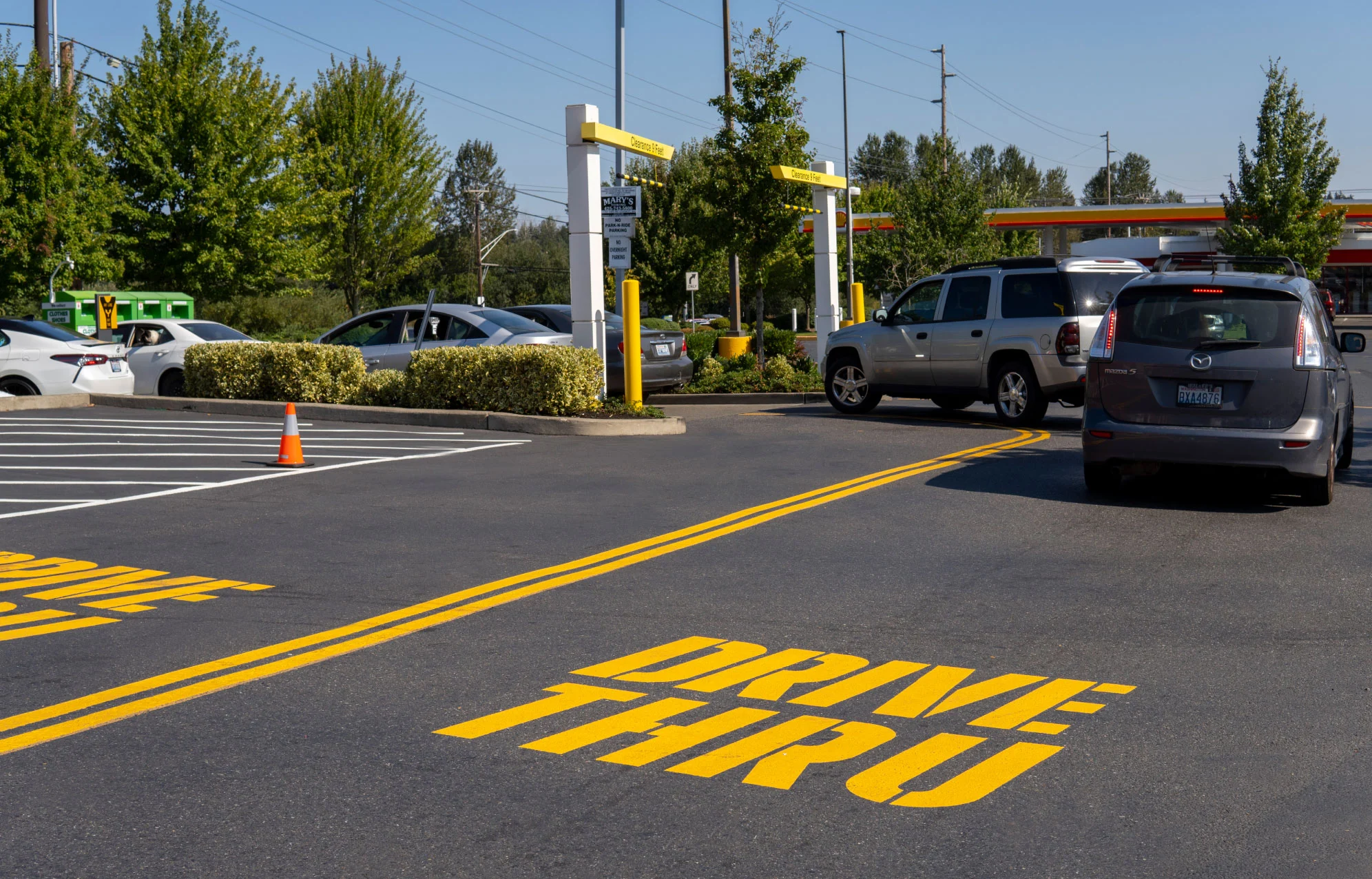
For decades, the loop detector has been the backbone of drive thru timing. Reliable, familiar, and widely deployed, these inductive sensors in the pavement were designed for a simpler era: one lane, one queue, no mobile orders. The modern QSR operation has outgrown them.
The question for operators today isn’t whether loop detectors work. It’s whether they tell you enough. And increasingly, the answer is no.
What Loop Detectors Can and Cannot See
A loop detector senses a vehicle’s presence by detecting a change in the electromagnetic field generated by a wire loop in the pavement. When a car sits over the loop, it registers. When the car moves off, the timer advances to the next event. It’s a clean, point-in-time signal that answers one question: is there a car here right now?
That is where the capability ends. Loop detectors cannot see where a car entered the lot, cannot track pre-menu stacking, cannot monitor mobile pickup zones or pull-forward areas, and cannot capture drive-offs. When a customer leaves without ordering, the loop registers only silence. There is no record of how long they waited, or that they were ever there.
For most of drive thru history, those blind spots were acceptable. Today, they represent real, measurable revenue risk.
What Those Blind Spots Cost You
The 25th Annual Intouch Insight Drive Thru Study found that average speed of service across QSR brands sits at 5 minutes and 35 seconds, and that wait time has grown to its largest gap from pre-pandemic levels. Customers are waiting longer in the queue, and operators are only measuring a portion of that experience.
Research shows that 30% of customers will leave without placing an order after five minutes of waiting, and that every five seconds of delay can cost a store as much as $9,500 in annual sales. If your timing system only starts measuring when a car reaches the menu board loop, you have no visibility into what happened before it got there.
What Camera-Based Detection Changes
Camera-based detection uses computer vision to track vehicles across the full customer journey, from the moment a car enters the lot to the moment it exits with an order. Unlike a loop at a fixed point, cameras can monitor any zone: the pre-menu stack, the menu board, payment, pickup, mobile order staging, and curbside.
That total visibility changes what operators can measure and improve. How long are cars stacking before they reach the speaker? Are customers abandoning the queue, and at what point? Is the mobile pickup zone creating congestion that slows the main lane? These are questions loop detectors cannot answer. Camera-based systems can.
When alerts and goals are based on the full customer journey, managers and crew work with a more accurate picture of what is actually happening in the lot, not just what the lane events show.
Loops vs. Loopless: Understanding the Difference
Loop-based systems measure discrete events at fixed detection points. They are proven, low-maintenance, and effective at capturing the core lane sequence: arrival at the menu board, pull to payment, pull to pickup, departure. For a straightforward single-lane drive thru, that data is sufficient.
Loopless, camera-based systems measure the customer experience continuously and across the entire lot. There are no fixed detection points and no gaps between them. Every second a vehicle is on your property can be tracked, timestamped, and reported. That means pre-queue wait, dwell time at each stage, drive-offs, and mobile pickup congestion all become visible for the first time.
The practical difference is this: loop systems tell you how long service took once a customer was in your lane. Camera systems tell you how long the entire experience took from the customer’s perspective. Only one of those numbers reflects what they actually felt.
The Hybrid Approach: Loops and Cameras, Working Together
A fully loopless timing infrastructure is where the industry is headed. As computer vision matures and camera-based detection becomes more precise, physical loop infrastructure will become less central to how drive thrus are measured. But that transition does not require operators to start from scratch.
The hybrid model combines existing loop detectors with camera-based vision: proven reliability plus expanded visibility. Loops keep measuring what they’ve always measured well, while cameras close the gaps. It’s the practical path toward total visibility without a full infrastructure overhaul.
Timing the Customer Experience, Not Just the Lane
The original purpose of drive thru timing was to give operators a way to measure and manage speed. That purpose hasn’t changed. What has changed is the scope of the experience that needs to be measured.
A customer’s experience begins the moment they turn into your lot, not when they trip a loop. Their patience starts running down before your timer ever starts. And if they leave frustrated after a two-minute pre-queue wait that your system never recorded, you have no way to know it happened, no data to investigate, and no baseline to improve from.
The shift from loop-based to camera-based timing is ultimately a shift in what operators define as the customer experience. The brands that expand that definition, and build their measurement systems to match, are the ones best positioned to improve it.
Ready to learn more about drive thru timing technology and what the right solution looks like for your operation? Talk to an HME representative today.
Share

JD Medford
Senior Customer Success Advisor, HME
