
5 Ways Drive Thru Communication Technology Impacts Your Bottom Line
By Rhonda Utley • May 8, 2026 • 5 minute read
Shaving seven seconds off service time can lift sales by 1%. Here are five ways your drive thru communication system shows up on the P&L, from audio clarity and crew coordination to downtime and how easily you can adopt what comes next.
Share
From Speaker Post to P&L: The ROI Case for Smarter Drive Thru Communication
Drive thru communication technology is one of the most underleveraged variables in QSR profitability. Operators invest heavily in staffing, menu engineering, and kitchen equipment, yet the system responsible for capturing every order, coordinating every handoff, and setting the pace of every transaction often goes unexamined until something breaks.
The 2025 Intouch Insight Drive Thru Study found that speed of service and order accuracy remain the two most influential factors in guest satisfaction and return visit intent. Both are directly shaped by the quality of drive thru communication technology. Here are five ways that technology determines what ends up in your P&L.
A 7-Second Reduction in Service Time Can Increase Sales by 1%
According to industry research, reducing drive thru service time by just 7 seconds correlates to a 1% increase in sales. At a high-volume QSR location, that is a meaningful revenue gain achievable without adding staff or changing the menu.
Audio clarity is the primary driver of that reduction. When a crew member hears the order correctly on the first pass, the transaction moves immediately. When they don’t, the lane stalls: the repeat request, the clarification, the correction at the window — all of it preventable. The 2025 Intouch Insight Drive Thru Study confirmed that service speed remains a top predictor of whether a guest returns. Eliminating communication friction at the speaker post is the fastest, most direct way to protect that metric.
Order Inaccuracy Is a Margin Problem, Not Just a Service Problem
Every incorrect order represents compounded cost: wasted food, wasted labor, and a guest who may not return. The 2025 Intouch Insight Drive Thru Study identified order accuracy as one of the most variable performance metrics across drive thru locations and one of the strongest predictors of guest loyalty.
The leading cause of inaccuracy is not crew error. It is noise. Kitchen equipment, HVAC systems, and ambient traffic create constant interference at the moment an order is placed. Communication platforms that suppress that noise at the source produce measurable improvements in accuracy, reducing remakes and the food cost that comes with them. Guests who receive what they ordered are significantly more likely to return.
Real-Time Crew Coordination Determines Throughput, Not Just Headcount
Throughput in the drive thru is not only a function of how many crew members are working. It is a function of how well they communicate in real time. A lane stalls when the order-taker, cashier, food runner, and kitchen are out of sync, and that synchronization depends entirely on the communication infrastructure in place.
Drive thru platforms that deliver real-time messaging directly to crew headsets allow managers to call out promo changes, flag incoming large orders, or redirect traffic without pulling anyone from their station. For multi-unit operators, the same capability extends across an entire portfolio from a single point of contact, compressing response time and keeping lanes moving during the peak hours that generate the most revenue.
Unplanned System Downtime Costs More Than the Repair
A 30-second delay in drive thru service can cost a QSR location tens of thousands of dollars in lost annual revenue. When that delay stems from a preventable system failure rather than a staffing or supply issue, the cost is compounded by the fact that it should never have happened.
Legacy communication systems are typically managed reactively: a failure occurs, a technician is dispatched, and service is disrupted in the interim. Modern platforms replace that model with proactive diagnostics that surface issues before they affect service, and remote troubleshooting that resolves many problems without a technician visit. Operators managing multiple locations gain visibility into system health across their entire portfolio, allowing them to act on potential failures before guests ever experience them.
Platform Architecture Determines Your Ability to Adopt What Comes Next
Drive thru communication technology is advancing faster than most legacy systems were designed to accommodate. Operators running older infrastructure face a recurring dilemma: absorb the cost of a full replacement, or remain on a platform that cannot support emerging capabilities.
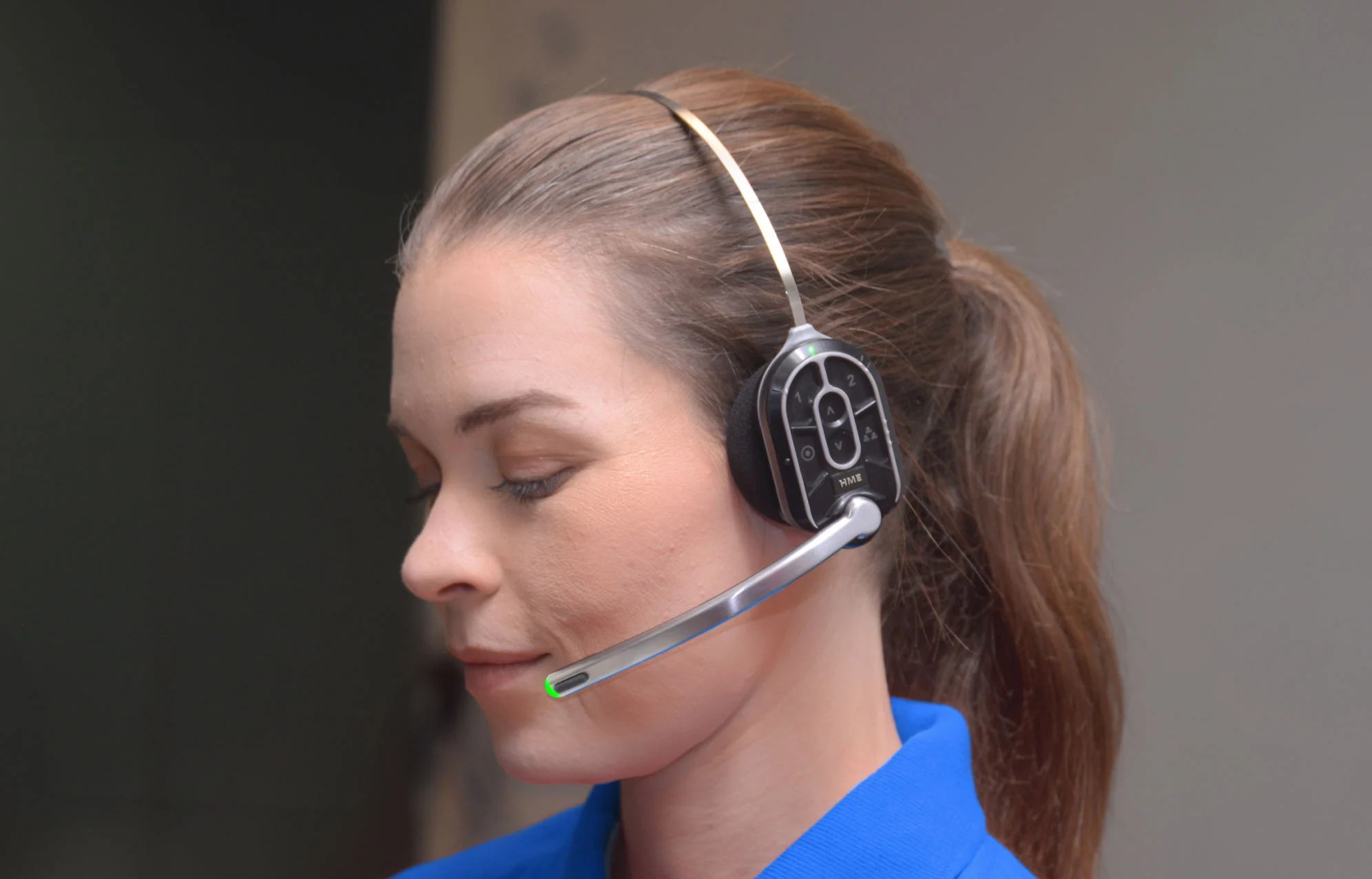
A modern, integrated platform like NEXEO | HDX™ eliminates that dilemma. Built on a cloud-connected architecture, NEXEO combines HDX Digital Audio, real-time crew messaging, timer-to-headset performance alerts, system diagnostics, and unlimited headset registration into a single system. When new capabilities become available, NEXEO operators receive them as updates, not as a replacement project. That architectural advantage has a direct financial value: it extends the useful life of the investment and avoids the disruption of a rip-and-replace cycle.
What Drive Thru Communication Technology Is Actually Worth
The 2025 Intouch Insight Drive Thru Study makes the case clearly: speed and accuracy are not operational ideals. They are revenue variables. Communication technology that improves both produces a measurable return — in sales, in food cost, in guest retention, and in the operational efficiency that compounds across locations and over time.
Operators who treat their communication platform as a strategic asset, rather than a commodity line item, are the ones best positioned to close the gap between what their drive thru is doing and what it is capable of. Talk to a QSR expert at HME to find out where that gap exists in your operation.
Share

Rhonda Utley
Customer Success Supervisor, HME
