
5 Questions to Ask When Evaluating a New Drive Thru Timer System
By Rhonda Utley • July 31, 2026 • 4 minute read
Not every drive thru timer measures the same things the same way. Choose the wrong one and you're left with numbers that look good but don't reflect what guests actually experience. Here are five questions to ask before you sign a contract.
Share
1. Does It Measure the Full Guest Journey?
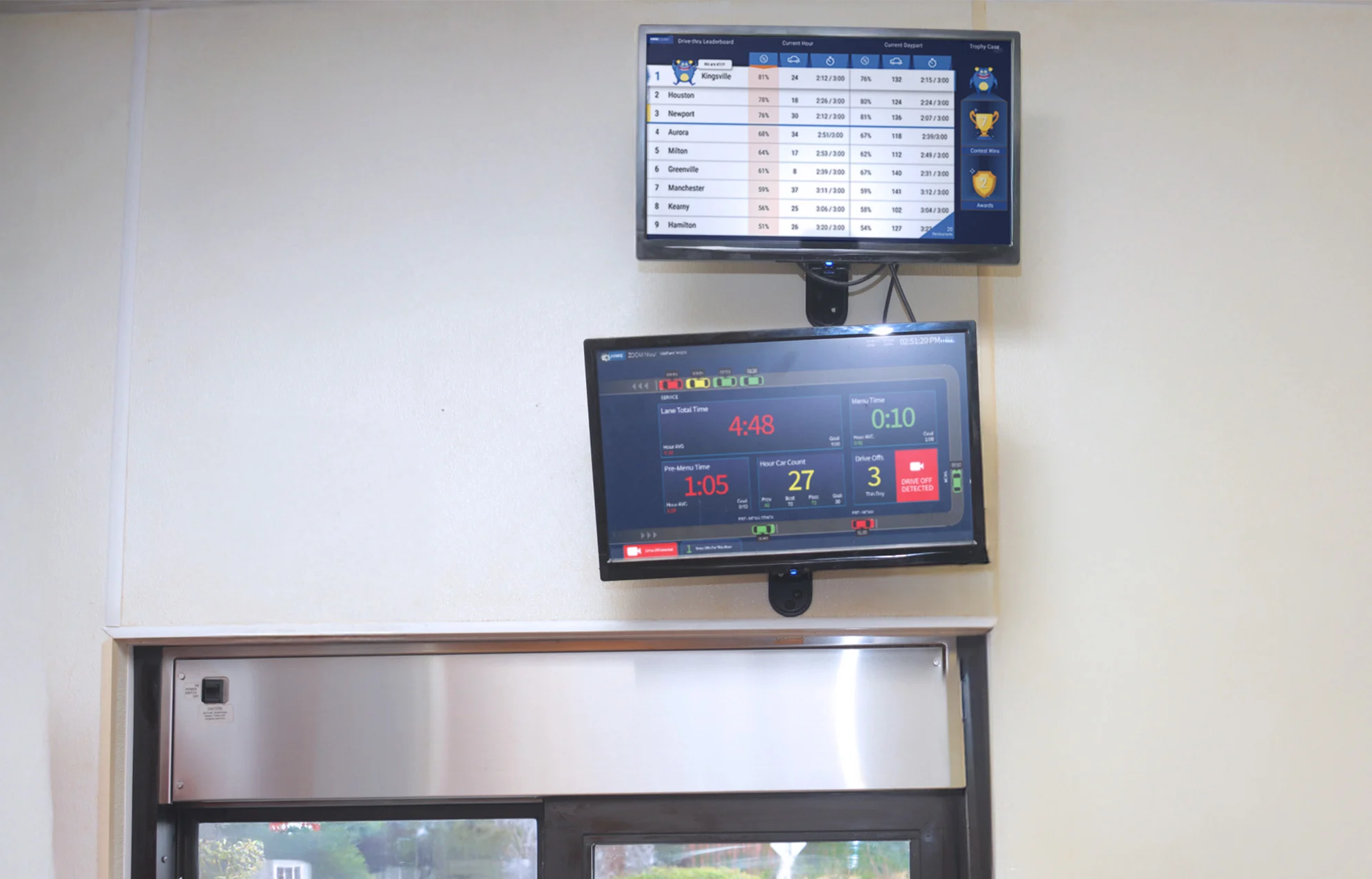
Some timer systems only track the moment an order is placed to the moment the car pulls away from the window. Others capture the entire visit, from the moment a vehicle enters the lane to the moment it exits the property. The second approach gives operators a far more complete picture, since delays often happen before an order is ever taken. According to the 25th Annual Intouch Insight Drive Thru Study, the industry average total time in 2025 was five minutes and 35 seconds, a figure that has held roughly steady for several years despite widespread technology investment. If a system cannot show where in that journey time is actually being lost, it is difficult to know what to fix.
2. How Does It Capture Data?
Legacy timer systems typically rely on in-ground loops that detect when a vehicle crosses a fixed point. These systems work, but they are limited to a small number of measurement zones and can be costly to repair when pavement is disturbed. Camera-based systems represent a newer approach that tracks vehicles visually across the entire lane without buried hardware. That distinction matters for accuracy, installation cost, and how easily the system adapts if a lane configuration changes down the road.
3. Can It Integrate With Your Communication System?
A timer is only as useful as the action it triggers. Systems that connect directly to headset communication platforms, such as NEXEO, can send real-time alerts to crew members the moment a car arrives or a threshold is crossed, without anyone needing to glance at a screen. That kind of integration turns raw timing data into an in-the-moment coaching tool rather than a report someone reviews after the shift ends. The same study found that good speaker clarity alone made drive thru interactions 54 seconds faster on average, and orders that did not need to be repeated saved another minute and 25 seconds, a reminder that speed and communication quality are closely linked.
4. What Reporting and Benchmarking Does It Offer?
Timing data is only valuable if operators can act on it. Ask whether the system offers trend reporting over time, comparisons against your own historical performance, and benchmarking across multiple locations or dayparts. A system that only shows today’s numbers makes it hard to spot whether a slowdown is a one-off or a pattern worth addressing through staffing, training, or process changes. HME’s broader suite of drive thru performance solutions is built around giving operators that kind of longer-view visibility, not just a single snapshot.
5. What Support and Maintenance Model Comes With It?
Even the best timer system is only useful when it is running. Ask potential vendors about response times for service issues, whether remote diagnostics are available, and what a maintenance agreement actually covers. A timer that goes down during a lunch rush and is not fixed for days does more than create a blind spot; it can quietly erode the accuracy of every benchmark built on top of it. Reliable support is not a minor add-on. It is part of what makes the data trustworthy in the first place.
Choosing the Right Fit
The right timer system should do more than clock a car from greet to pull-away. It should measure the full guest journey, capture data reliably, connect with the tools your crew already uses, and come backed by reporting and support that make the numbers worth acting on. Asking these five questions upfront can help operators avoid a costly mismatch and choose a system built for how their drive thru actually runs.
Ready to evaluate your drive thru timer options? Speak with an HME representative today.
Share

Rhonda Utley
Customer Success Supervisor, HME
